
The Winter Skin Prep Guide: Start Before Your Skin Gets Dry
There is a point every year when the air changes. The mornings feel cooler, the humidity begins to drop, and suddenly the skin that was perfectly happy all summer starts feeling a little different.
Maybe your cheeks feel tight after washing your face. Your hands need more moisture. Your legs feel dry even though you have not changed anything about your routine. Or you find yourself reaching for heavier creams more often.
Winter skin does not have to be something you simply endure.
One of the best things you can do for your skin is start preparing before the cold weather really arrives.

Why does skin become drier in the winter?
Cold outdoor air naturally contains less moisture than warm air. Then we head indoors, where heating systems create another dry environment. Add hot showers, frequent hand washing, wind and changes in your usual routine, and your skin can have a lot to contend with.
Your skin has its own protective barrier that helps keep moisture in and environmental irritants out. When that barrier becomes dry or disrupted, you may notice tightness, flaking, rough patches, sensitivity or that uncomfortable feeling that no amount of lotion seems to fix.
This is why winter skincare is not just about adding more products. It is about supporting your skin before it starts asking for help.
Start simplifying your routine
As the seasons change, it can be tempting to add more.
A richer moisturizer. A new serum. A new exfoliant. A face oil. Another treatment.
But more is not always better.
A simple routine with nourishing ingredients can be much easier on your skin than constantly changing products or layering a long list of active ingredients.
Think about what your skin actually needs.
A gentle cleanser.
A nourishing moisturizer or balm.
Protection from the elements.
And consistency.
That is often a very good place to start.
Do not wait until your skin is already dry
One of the biggest mistakes we make with seasonal skincare is waiting until our skin is uncomfortable before changing anything.
Instead, think of fall as the transition period.
As the weather gets cooler, begin using a more nourishing product on areas that tend to become dry. Pay particular attention to your hands, elbows, knees, feet and any areas that typically become rough during the winter.
For your face, you may find that your usual moisturizer needs a little extra support. A small amount of a nourishing balm can be applied over your moisturizer to help seal everything in.
The goal is not to wait until your skin is desperately dry. The goal is to support it before it gets there.
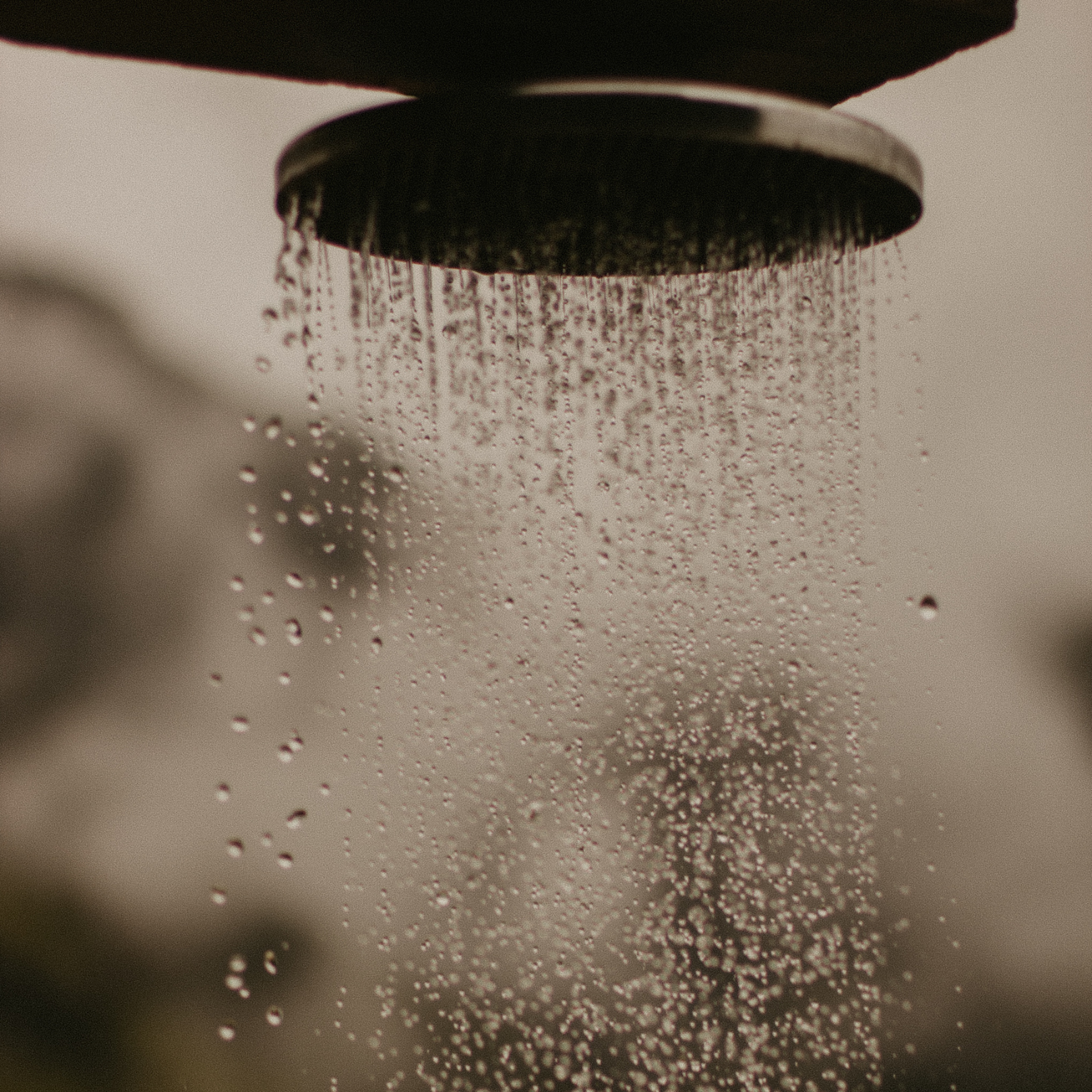
Keep your showers warm, not scorching
We know. A long, hot shower on a cold day feels incredible.
But very hot water can strip the skin of its natural oils, leaving it feeling dry and tight.
Try keeping your showers comfortably warm instead of extremely hot, and keep them relatively short. Choose a gentle cleanser and avoid aggressively scrubbing already dry skin.
Once you get out, pat your skin dry rather than rubbing it vigorously with a towel.
Then moisturize while your skin is still slightly damp.
This simple step can make a noticeable difference during the colder months.
Give your hands a little extra attention
Our hands are often the first place we notice winter dryness.
We wash them constantly, expose them to cold air and rarely give them the same attention we give the rest of our skin.
Keep a small balm beside your sink or in your bag so you can apply it after washing your hands. At night, apply a more generous layer to your hands and let it work while you sleep.
If your hands tend to become especially dry during the winter, gloves can also help protect them from cold air and wind when you are outside.
Do not forget your lips
Lips have a very thin protective barrier and can become dry quickly when temperatures drop.
Cold air, wind and indoor heating can all contribute to chapped lips.
Instead of constantly licking your lips when they feel dry, keep a nourishing balm nearby and apply it regularly. A simple formula made with ingredients that help soften and protect the skin can be especially useful during the colder months.
And yes, this is also where a good tallow balm can come in handy.
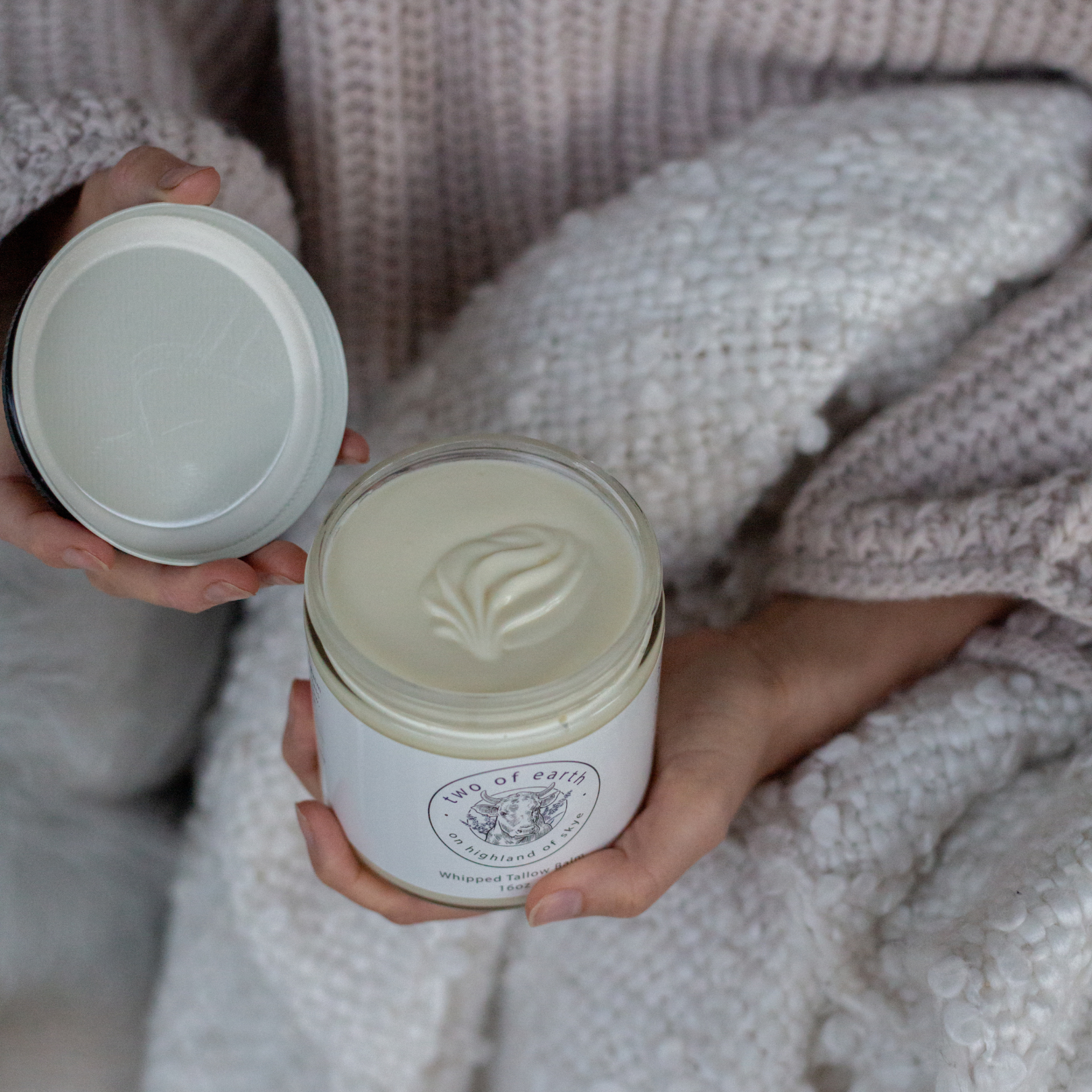
Why tallow can be a beautiful addition to a winter routine
Tallow has been used traditionally as a source of nourishment for the skin because its composition is rich in fatty acids that are naturally compatible with the skin's lipid barrier.
At Two of Earth, our tallow balms are made with 100% grass fed and finished Canadian beef suet tallow, along with nourishing jojoba oil and organic calendula.
Our Original balm is scented with a small amount of lavender, frankincense and lemongrass essential oils, while our Sensitive balm contains no essential oils.
The result is a simple, rich balm that can be used wherever your skin needs extra nourishment.
Hands. Elbows. Feet. Dry patches. Lips. Cuticles. Or anywhere else that tends to feel a little neglected once winter arrives.
Your winter skin routine does not need to be complicated
If your goal is healthier, more comfortable skin this winter, you do not necessarily need a shelf full of products.
Start with the basics.
Use a gentle cleanser.
Avoid excessively hot showers.
Moisturize while your skin is still slightly damp.
Protect your skin from cold and wind.
Pay attention to the areas that tend to become dry first.
And introduce a nourishing balm before your skin becomes uncomfortably dry.
Most importantly, listen to your skin.
The best routine is not necessarily the one with the most steps. It is the one that works for you and that you can actually stick with.
Winter is coming. Your skin does not have to wait until it is dry and irritated to get a little extra care.
Start now, keep it simple, and let your skin thank you later.
